About AEJ
We are a national alliance of grassroots youth organizing groups working to transform public education and build the power of young people in their communities.
Who We Are
Our members organize with young people who experience the consequences of school disinvestment, policing, racism, and policies that leave communities out of decisions about their own futures.
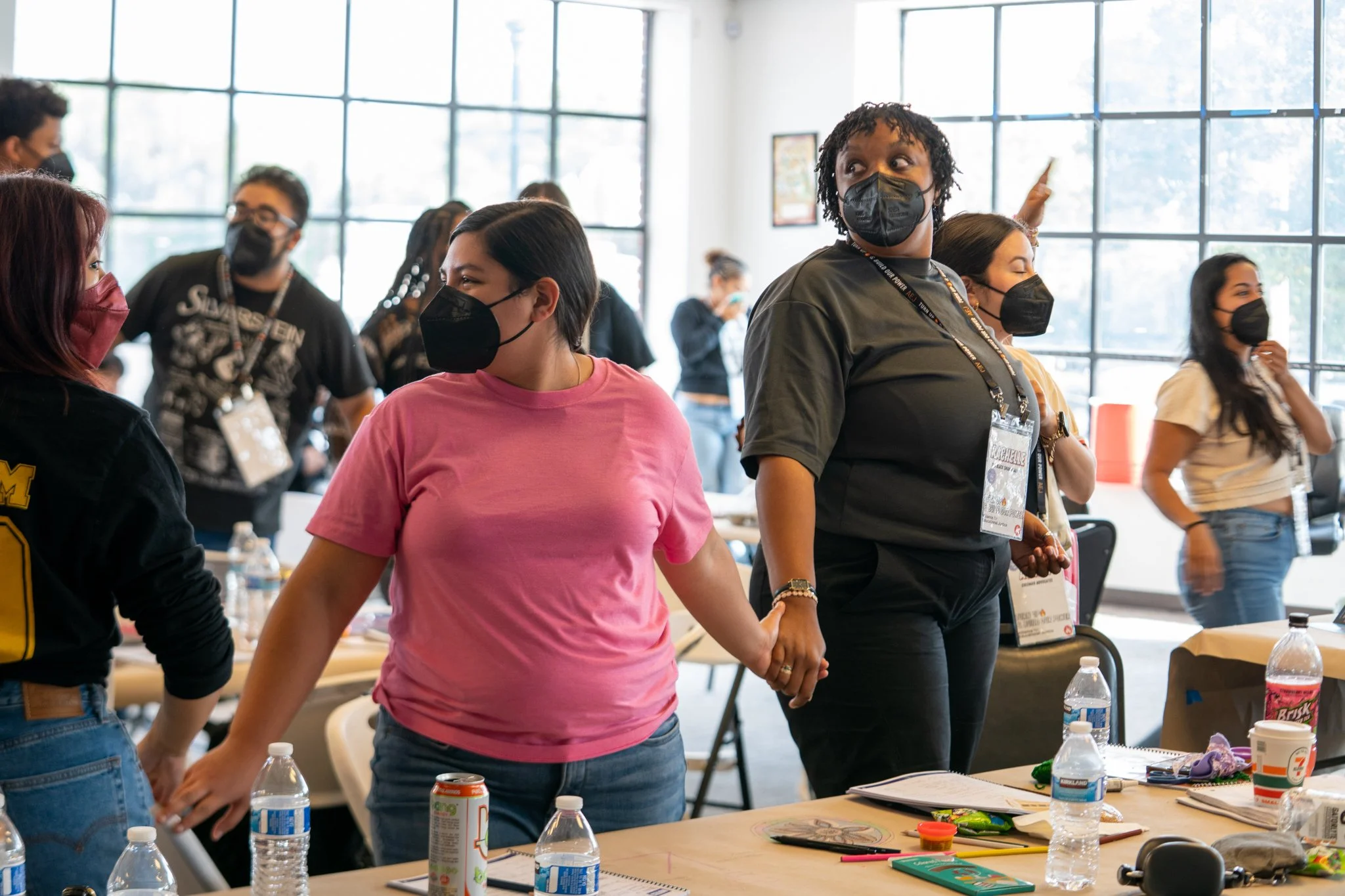
They lead campaigns to change those conditions. AEJ brings them together to share strategies, develop young organizers, support one another through difficult fights, and take collective action when national coordination is needed.
For us, that means young people must be more than participants in conversations about education. They must have real opportunities to organize, make decisions, and lead.
Our First Fight
AEJ was founded in 2008, bringing together grassroots youth organizing groups committed to transforming the conditions facing young people in public schools.
During the Obama administration, AEJ organized alongside youth and civil rights advocates to push the U.S. Department of Education to confront discriminatory school discipline.
Our organizing helped advance the expansion of the Office for Civil Rights' national data collection on suspensions, expulsions, and referrals to law enforcement. The resulting data exposed the disproportionate punishment and exclusion of students of color, particularly Black students.
This work contributed to a national shift. In 2014, the Departments of Education and Justice issued landmark federal guidance addressing racial discrimination in school discipline and recommending approaches to keep young people in classrooms rather than pushing them out.
It was a victory built through years of organizing to make the experiences of young people impossible to ignore.
From Ending the School-to-Prison Pipeline to Police-Free Schools
The killings of Trayvon Martin in 2012 and Michael Brown in Ferguson in 2014 marked a turning point for AEJ. As young people rose up against anti-Black violence, our alliance began examining the connections between state violence, policing, and the criminalization of young people in schools.
The militarized police response in Ferguson led us to learn about the federal programs, like program 1033, supplying military equipment to law enforcement departments, including school police departments. This discovery deepened our understanding of the roots and impact of school policing.
At the same time, AEJ began tracking police assaults against students through our Assault at work and developing tools to help communities respond, support students facing disciplinary or legal consequences, and organize to prevent further harm.
These experiences shaped our Police-Free Schools strategy, moving beyond responding to individual incidents toward challenging the systems that allow police violence in schools. Through research, political education, and grassroots organizing, we helped build a national movement to remove police from schools and create safer learning environments for all young people.
Defending Our Communities, Building Youth Power
The uprisings following George Floyd's murder in 2020 strengthened the national movement for Police-Free Schools. As young people organized to challenge police violence, AEJ worked alongside grassroots organizations to advance these demands and defend hard-won victories.
In the years that followed, our alliance responded to emerging threats, from school closures and disinvestment to surveillance and immigration enforcement, while strengthening relationships and organizing across cities.
Through national gatherings, the Youth Justice Corps, and strategic direct action training, AEJ invested in developing youth leadership and rebuilding national organizing power. In 2026, nearly 300 young people and organizers came together in Denver to strengthen their skills, share strategies, and prepare for collective action.
Our work continues to connect local struggles, defend our communities, and build the youth power needed to transform education.